

Books & Bakes is my read-a-thon raising money for Cake4Kids, an organization that provides birthday cakes to underserved and at-risk children. Every Friday through Labor Day, I’ll be posting reviews and round-ups of what I’ve read and a preview of what I’m reading. Make your pledge here!
A few days back, a minor kerfuffle blew through the books crowd on social media as a handful of readers asked for writers to stop using “hard” words because they’re ableist. Things devolved as quickly as you’d expect — I’ll admit to wanting to burn down the world at the idea of pruning big words from prose — but it did lead to a different discussion about so-called “purple prose,” the ostentatiously florid literary style associated with some of the worst examples of fiction.
You’re correct to suspect that I have a weakness for dense and beautiful prose, which is generally what purple prose attempts to be but fails. I can’t help it, I love words. One of the many sins of Strunk and White was the admonition to “Avoid fancy words,” which makes sense for anyone engaging in day-to-day writing — not everyone will appreciate you dropping “obstreperous” into an email, especially if you’re referring to them — but not for creative writing where style and substance are on equal footing.
Note that I’m saying I enjoy fancy words, not that I use them particularly well. Eye of the beholder, and so forth.
That said, it is hard to write spare and simple prose that’s also gripping and entertaining. If it were easy, you’d see a hell of a lot more of it. Which brings me to the inaugural novel of my Books & Bakes read-a-thon, The Hunter, an early sixties noir crime novel by Richard Stark, a.k.a. Donald Westlake, famous for his razor-sharp sentences, spare paragraphs, and propulsive plotting.
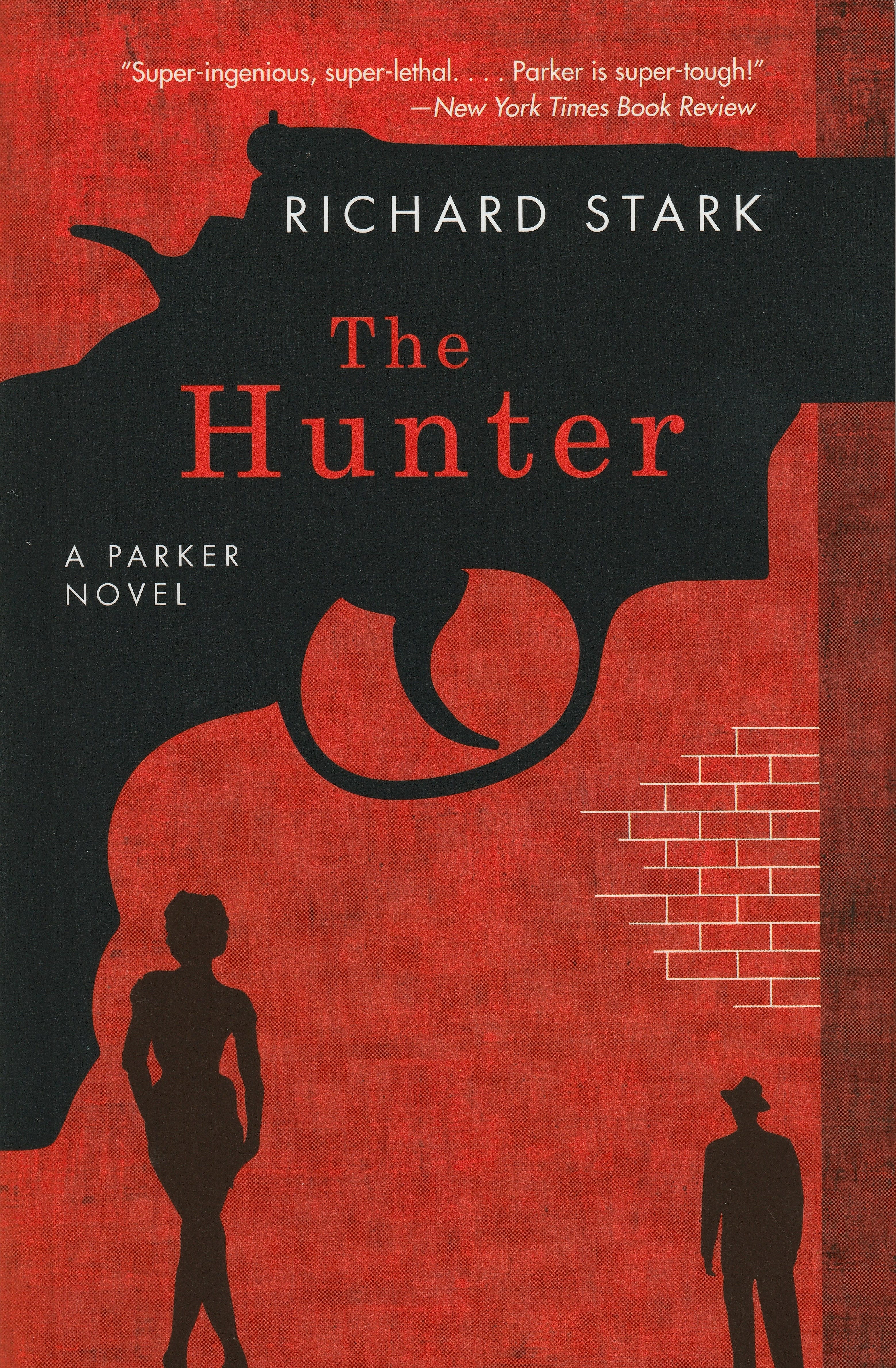
The Hunter is the first in a long series of crime novels starring Parker, a professional thief and amoral hulk of a man. In his debut, Parker has been scammed, shot, and left for dead by his cowardly former accomplice, Mal. The opening paragraph sets the tone, character and location:
“When a fresh-faced guy in a Chevy offered him a lift, Parker told him to go to hell. The guy said, ‘Screw you, buddy,’ yanked his Chevy back into the stream of traffic, and roared on down to the tollbooths. Parker spat in the right-hand lane, lit his last cigarette, and walked across the George Washington bridge.”
Parker walks that bridge on a course for revenge. Having lost everything — his wife, his money, his jet-setting criminal career — he’s going to get them back. Well, except the wife, she was in on it, too. His pursuit of Mal and the collateral damage he leaves in his wake feels like the ur-text of anti-hero crime fiction, a heterosexual male power fantasy that leaves you feeling a little queasy when you hope he succeeds.
I’m not joking when I say this is one of the most heterosexual male things I’ve ever read and I paged through plenty of my dad’s Hustlers back in the day. Westlake may eschew similes and adverbs but he never lacks when it comes to describing the women, mostly “working girls,” that exist mainly to spice up the story for the intended reader.
“Her face had been chiseled with care, honed and smoothed to creamy perfection, slender brows arched over green eyes, aquiline nose, soft-lipped mouth with just a trace of lipstick, long slender throat and cameo shoulders. … He turned to look at the back view, the straight spine, the sides curving in to the waist, blossoming below in the long curve over the hips and sweeping away down the length of leg.”
I’m queer as a three-dollar bill but that’s some good stuff.
While the actual text is PG-13 at most, the violence against women may be too much for some even when judging it by the standards of its time. It is, of course, often the point, as the men who drive the story, whether the villain you’re rooting for or the villains you’re rooting against, are all criminals to the core, the essence of The Bad Man.
That’s the hetero power fantasy on display. Where the women are described in fleshy detail, Parker is hewn from harder stuff: “His face was a chipped chunk of concrete, with eyes of flawed onyx. His mouth was a quick stroke, bloodless.”
His relationship to women — and the fantasy of how some men want to be perceived by women — is captured as he walks across that bridge:
“The office women looked at him and shivered. They knew he was a bastard, they knew his big hands were born to slap with, they knew his face would never break into a smile when he looked at a woman. They knew what he was, they thanked God for their husbands, and still they shivered. Because they knew how he would fall on a woman in the night. Like a tree.”
I picked up The Hunter because Westlake’s work under the Stark pseudonym has always hovered on the edge of my literary awareness, serving as a muse to many of my favorite authors (Stephen King is a raving fan, because of course he is). I wanted to experience his famed precision and ruthlessness. I got what I asked for and then some, because I plan on reading at least another two or three of the twenty-four total Parker novels.
If there’s a technical flaw to The Hunter, I’d say it suffers from the same syndrome as just about every fantasy series I’ve ever read: the first book is all set up, to the point it reads like a prequel. Here, Westlake explicitly sets Parker up for continuing adventures with an ongoing set of antagonists as he plots to take on the mob.
But if you’re looking for a quick and cool read during this brutal heatwave, The Hunter has you covered. If you do, I’d love to hear your thoughts here at The Back Half, whether on The Hunter, hard-boiled crime, or your favorite crime writers.
On Deck for Week 2
For the coming week, I’ll be finishing T. J. Martinson’s western Kentucky thriller, Blood River Witch. After that, I plan on hitting one of two memoirs: Viet Thanh Nguyen’s A Man of Two Faces, which I previewed here, or Joan Didion’s The Year of Magical Thinking, her lauded memoir of grief.
I grabbed Didion’s memoir on impulse because her name cropped up in an article I was reading and I realized I’d never read her, which is something I feel I should rectify. Neither of these promise to be the lightest of reads but I want to keep things varied and interesting for the next few weeks of Books & Bakes.
I want to thank everyone who has already pledged their support for Books & Bakes. I had a very small goal in mind for this first year, thinking that if I could raise a couple hundred bucks for a good cause I’d be happy. We’re well beyond a couple hundred bucks now, thanks to you!
And it’s never too late to make a pledge. Books & Bakes runs through Labor Day and every book I read between now and then can earn $1, $5, or $10 to support Cake4Kids. Visit my Books & Bakes website at seanbuggrealtor.com and sign on today!