

You don’t have to get old to start losing a step in videogames. By my mid-thirties I’d already noticed my hand-eye coordination wasn’t keeping up with the youngsters growing up behind me.
Not that I was a great example of videogame skill in the first place. But in my twenties, I could still hold my own against the tween and teen boys that were, at the time, still considered the primary audience for games. I once put the smackdown on a bunch of kids playing Mortal Kombat 3 in a bowling alley in Kentucky, hard enough that when one of them miserably asked why I only did Sub-Zero’s Fatalities, I started doing Friendships to make sure he didn’t cry.
The notion of having a shot at winning a fighting or shooting game against an opponent under forty is firmly in the rearview. I’m fine with that, since my gaming tastes have always skewed more towards role-playing games like Final Fantasy and Skyrim, where the focus is more on story and discovery than on twitch-reflex mechanics.
Or at least that used to be the case.
Over the past couple decades, RPGs and action/adventure games have taken on a lot more twitchy (and punishing) mechanics. There have always been hard videogames, though in many infamous cases those games were difficult due to bad design not developer intent. I tend to mark the beginning of the change with Demon’s Souls in 2009, though some might argue for Ninja Gaiden Black in 2005.
The thing with Demon’s Souls and its successors (Elden Ring in particular) is that they don’t have difficulty settings. The games are what they are: purposefully difficult games that punish you mercilessly with repeated death until you master an unforgiving parry, dodge, and block system. There is no retreat to “easy” mode. Do, or die.
Many, many gamers thrive in this “difficult for the sake of being difficult” genre. Skills are tested, talents honed, and bragging rights gained.
For me, they are a nightmare. I suck at parrying. There is no other way to put it or excuse it, it’s just not a mechanic I’m particularly good at these days, if I ever was. That didn’t stop me from throwing myself at the mercy of many of these games in fruitless efforts to enjoy what everyone else was telling me were transcendent entertainments.
In other words, I’ve spent a lot of money on games where I never made it past the opening area. Elden Ring sits there on my list of owned games, taunting me for four years with its promise of gorgeous vistas and haunting mythology that I’m too fat-fingered to experience.
I’ve tried to swear off buying these types of games, mostly with success. If anything is marketed as a Souls-like, I know it ain’t for me. But the thing is, sometimes a difficult game will just click for me and I’ll find myself thinking, “Well, this isn’t so hard.” Most recently, Dragon’s Dogma 2 was supposed to be a quasi-inscrutable, high-difficulty fantasy game that I weirdly vibed with and completed without too much issue.
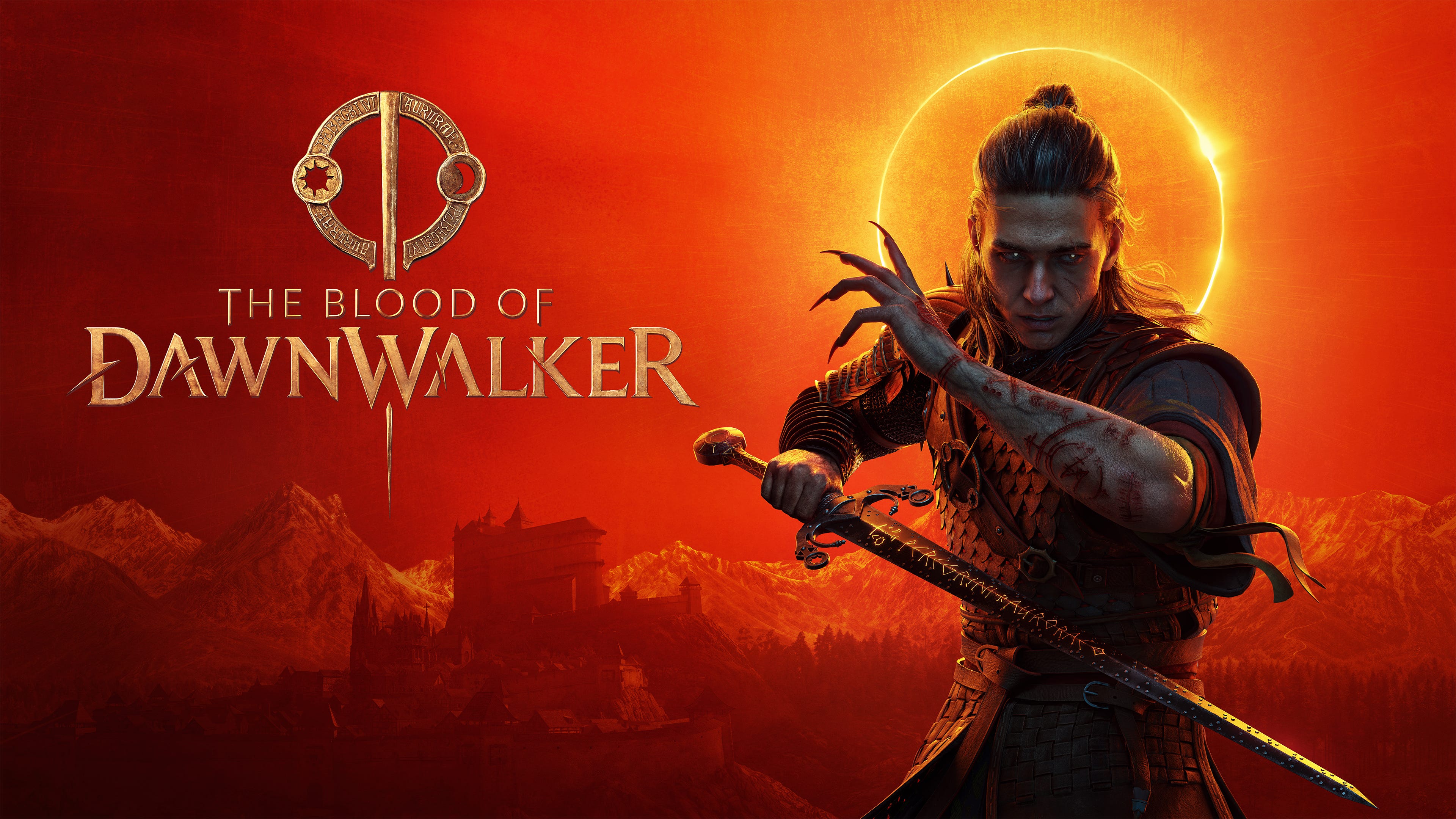
Which brings us to The Blood of Dawnwalker, a new action RPG from some of the creators of The Witcher III — arguably the best example of the genre of the past decade. I’ve put a lot of time into The Witcher, enough that I’d be embarrassed to include the total number of hours here. Suffice to say that after a couple of aborted starts as I tried to wrap my head around the combat I finally reached that click and lost myself in The Witcher’s dense and rich fantasy world based on medieval Poland.
Dawnwalker is much the same but with vampires. Nutshell plot: A powerful vampire and his three minions take over an isolated valley where peasants are suffering from both the plague and a brutal lord. The vampires eliminate both in exchange for regular tithes of blood from the peasants. A young man, Coen, tries to save his family from the vampire’s plans and is mysteriously turned into a half-breed vampire — human by day, blood drinker by night.


The twist of Dawnwalker is time: Coen has thirty in-game days to save his family. Every quest and decision eats up part of that time, adding some actual tension to choices you have to make. The game is filled with far more quests than you can do in the allotted days, forcing you to choose between, say, disrupting supply routes to weaken one of the vampire minions or solving a murder mystery in town.
This is the kind of thing I really enjoy and what drew me to give the game a shot even though it has one big feature that gave me pause: a directional-based parry system. In order to parry, you need to both time a button press and choose the direction in which to parry.
That’s two quick-reaction feats where just one normally gives me fits.
Initially, I’d planned on giving Dawnwalker a pass just for that reason. But the reviews were positive, I really do love narrative RPGs, and it looked great. Then I heard Kirk Hamilton at the Triple Click podcast describe the parrying combat as similar to rhythm games, and I used to love rhythm games (I still have a real Gibson guitar I bought that was converted into a Rock Band controller, I was little nuts back then).
So I gave it a shot. And it did not go well.
I was dying. A lot. I struggled to get through all the initial fights, dying many times as I tried and tried to nail the timing as bears and soldiers and creatures beat me down. I learned to deal with these single opponents only to find that I couldn’t handle situations where an entire group of them were surrounding me as I flailed with mistimed panic. It did not feel like a rhythm game.
I wanted to play the game on normal difficulty. I have no problem dropping a game’s difficulty level if I’m having trouble. Plenty of other gamers — primarily younger, obnoxious male gamers whose only identity revolves around trash talking from the safety of internet anonymity — deride difficulty settings. Not me. I paid good money for a fucking game, I’ll play it how I want.
But this time, for some weird reason, I wanted to learn how to do it. I didn’t want to coast my way to the end on “story” mode. So I died. And I died again. And again. Many, many times.
Then, suddenly: click.
I felt the rhythm. I reached the flow state. I found myself effortlessly parrying attacks and countering from the depths of a mass of enemies, barely taking any damage.
The game turned easy.
Well, somewhat easy. Once the combat clicks, the main challenge becomes fighting the camera and targeting system, which are among the worst I’ve seen in many years. It’s not a deal breaker and the publisher has announced some fixes in an upcoming patch, so your first journey may be a bit easier than mine.
I definitely would recommend giving Dawnwalker a spin if you like these types of action/adventure games. The story is strong, the voice performances are (mostly) on point, and the graphics and art direction are detailed and sometimes even beautiful. With the time mechanic, you won’t get lost meandering through a too-large world with too many disconnected quests (basically any Assassin’s Creed or other Ubisoft map game these days). Rather than trying to convince you to play forever, Dawnwalker convinces you to choose a path and then, when you’re ready, come back and choose another.
And for gay gamers, you can pursue a straight or gay romance. Or both. Coen gets a lot done in thirty days.
Ultimately, I’m just glad — and maybe a little proud — to find that my reflexes haven’t completely abandoned me. It’s no great accomplishment but it’s good to know I can still do it.
Maybe, just maybe, I’ll take that one last run at Elden Ring.